Suphannahong Royal Barge – A Designer’s Honest Review for Real Projects
When I first opened the embroidery file for the Suphannahong Royal Barge, I wasn’t sure what to expect. A royal ceremonial boat from Asia carries a lot of cultural weight, and translating that into thread requires real thought. After stitching it out on several different blanks, I can tell you this design has genuine potential for craft businesses, Etsy sellers, and anyone looking to offer something distinctive. But it also comes with quirks you need to know before you commit to a production run.
Let me walk through what this machine embroidery design does well, where you need to be careful, and how it actually performs in a real embroidery project.
First Impressions of This Royal Barge Design
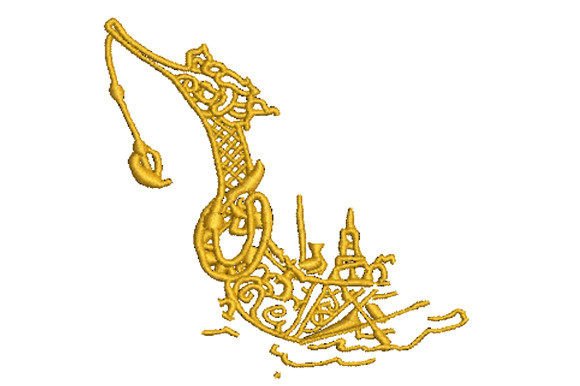
The Suphannahong Royal Barge immediately gives off a ceremonial, regal mood. The shape is long and elegant, with a distinct bow that rises like a mythical creature. The overall silhouette feels traditional and detailed without being cluttered beyond reason. For an embroidery design, that balance matters. You want something that looks rich and intentional when stitched, not a mess of tiny fill stitches that blur together on a tote bag or sweatshirt.
Visually, this design belongs on products where craftsmanship is part of the appeal. Think handmade gifts, boutique merchandise, or personalized items that feel special. The barge theme works well for anyone with a connection to Asian heritage, royal ceremonies, or nautical symbolism. But even outside that niche, the design holds its own as an artistic statement.
The detail level sits in a comfortable middle zone. It has enough going on to impress at first glance, but not so much that you need a magnifying glass to appreciate it. That makes it a strong candidate for both apparel and home decor projects.
Where This Design Shines in Real Embroidery Work
After testing the Suphannahong Royal Barge on several surfaces, I found a few product categories where it really delivers.
Custom apparel is the obvious starting point. A sweatshirt with this design centered on the chest or upper back has a stately, artistic feel. It works on a classic crewneck or a zip hoodie. The elongated shape of the barge fits well on the front of a t-shirt too, especially if you scale it to sit just below the collar. I stitched it onto a dark charcoal sweatshirt using gold and cream thread colors, and the contrast was striking. Customers who appreciate cultural or ceremonial themes will notice the difference.
Tote bags are another natural fit. The horizontal layout of the barge works nicely on a canvas tote. I tested it on a mid-weight natural cotton tote, and the satin stitch details held up well without distortion. For a small shop or Etsy seller, an embroidered tote with this design reads as a handmade product with real thought behind it. It elevates a simple bag into something giftable.
Embroidered patches are a smart play here. If you sell digital embroidery files or finished patches, the Suphannahong Royal Barge cuts a clean shape that works well as a standalone patch. Stitch it on twill or felt with a satin stitch border, and it becomes a sew-on or iron-on piece that buyers can attach to jackets, backpacks, or caps. This opens up commercial embroidery possibilities without committing to a full garment run.
Pillow covers and tea towels also suit this design. On a linen pillow cover, the barge adds an elegant focal point. On a kitchen towel, it feels like a conversational piece rather than a generic decoration. For holiday embroidery or special occasion gifts, this design brings a sense of occasion.
Baby and nursery items are less obvious but still viable if you keep the colors soft. A onesie or receiving blanket with a muted version of the barge could work for a culturally themed nursery. Just be mindful of the stitch density on delicate fabrics, which I will cover shortly.
Places to Use This Design with Care
No design is perfect for every surface, and the Suphannahong Royal Barge has specific limitations you should plan for.
Small hoop sizes are the first concern. If you are working with a 4x4 hoop, you will need to shrink the design considerably. That means the finer details like the bow ornamentation and any decorative accents may lose clarity. I recommend testing it at your intended scale on scrap fabric before stitching a final product. If the details start to muddy, consider using a larger hoop or adjusting the design to simplify small elements.
Stretch fabrics like performance tees or lightweight knits can be tricky. The barge design has areas of satin stitch and fill stitch that need stable fabric underneath. Without proper stabilizer, the stitches can pull or distort. I used a medium-weight tear-away stabilizer on a cotton-poly blend sweatshirt and got clean results. On a stretchy jersey t-shirt, I would step up to a cut-away stabilizer and consider a temporary spray adhesive to keep everything aligned.
Thin or delicate fabrics such as fine linen, silk, or lightweight voile require extra caution. The stitch density in the denser sections may cause puckering or show through to the back. For a project like a baby embroidery piece on a onesie, I would reduce the density if your embroidery software allows it, or choose a fabric with more body.
Curved surfaces like caps or hats are not ideal for this design. The elongated, horizontal layout fights the natural curve of a cap crown. You would need to scale it down significantly, and even then, the detail may not read well from a distance. If you want to offer a cap version, I would recommend using a flat-front cap style or a bucket hat where the surface is more forgiving.
Dark fabrics require thoughtful thread color selection. The barge design relies on subtle shapes and lines. On black or navy fabric, use bright metallic or high-contrast thread colors to preserve the visual appeal. I tested it on black twill with gold and white thread, and the result was strong. On dark green or burgundy, test your palette first.
Frequent washing is a consideration for products like tea towels or baby clothes. The satin stitch details can catch or fray over time if the design is dense or the fabric is loosely woven. Advise your customers to turn the item inside out and wash cold. For your own production, consider a light layer of stitch reinforcement on the back, especially on items that will see heavy use.
How This Design Boosts Product Value and Customer Trust
From a business perspective, the Suphannahong Royal Barge does something important: it gives your product a story. When a customer buys an embroidered tote or sweatshirt with this design, they are getting more than a decoration. They are getting a piece of cultural imagery from Asia, presented with respect and craftsmanship. That kind of authenticity builds trust and makes your handmade product more memorable.
For Etsy sellers and small shop owners, this design works well in listing photos and printable mockups. Its distinctive shape stands out in a thumbnail. I like to photograph it on a neutral background with natural light to highlight the thread texture. Customers respond to detail they can see, and the barge design has enough visual personality to stop the scroll.
The design also supports brand consistency. If you specialize in cultural, historical, or ceremonial themes, this piece fits naturally into your catalog. It pairs well with other Asian-inspired motifs without feeling repetitive. For a boutique branding or a craft business targeting heritage-conscious buyers, it adds depth to your product range.
Giftability is another factor. This design looks intentional. It does not look like a quick digitizing job. When a customer buys a personalized gift featuring the Suphannahong Royal Barge, they feel confident handing it over. That translates into positive reviews and repeat orders.
Practical Notes Before You Stitch
Before you use this embroidery file in a commercial project or even a personal one, there are a few steps I always recommend.
Test the design on scrap fabric first. I cannot overstate this. Stitch it out on a material similar to your final product. Check the thread colors against your fabric. Look at the stitch density in the fill areas. If anything looks off, adjust your settings or your stabilizer choice before you commit to a batch.
Review thread color contrast. The barge design works best when the main shape pops against the background. Test it on both light and dark fabrics. I like to run a black and white mockup on paper first to see if the shapes hold their own without color. If the design disappears in grayscale, you need more contrast.
Confirm your hoop size. The product listing may not specify exact dimensions. Before you buy or use the file, check the stitch field requirements. If you are working with a smaller hoop, scale carefully and test the detail retention. If the design comes in multiple sizes, choose the one that fits your intended product without distortion.
Inspect small details. Zoom in on the digitized file. Look at the bow details and any decorative accents. If you see tiny satin stitches that may not register on fabric, simplify them or remove them. A clean, readable design is better than a crowded one in embroidery.
Use proper stabilizer. For most woven fabrics, a medium tear-away works well. For knits, stretch fabrics, or lightweight materials, move to a cut-away stabilizer. This is especially important if you are stitching the Suphannahong Royal Barge on apparel that will be worn and washed regularly.
Check licensing before selling finished items. If you are an Etsy seller or small business owner, confirm that the design license allows commercial use. Some embroidery files come with restrictions on how you can sell the finished product. Others allow unlimited use. Verify this before you list that tote bag or sweatshirt in your shop. The same goes for digital product sellers offering design assets or printable mockups. Respect the creator’s terms.
Also confirm whether the file format works with your machine. Most modern embroidery machines accept common formats, but it is worth double-checking before you purchase.
One more note: do not skip the test stitch on a curved surface if you plan to use this on caps or rounded bags. The barge shape is linear, and it requires a flat or gently curved base to look its best. On a curved surface, test first and decide if the distortion is acceptable for your project.
For craft business owners, this design is a solid addition to your library if you handle cultural, nautical, or ceremonial themes. It is not a throwaway design. It needs thoughtful placement and good fabric choices, but when you get it right, the finished product looks professional and intentional.
The Suphannahong Royal Barge is one of those embroidery projects that rewards the extra setup time. It is not a quick stitch for every surface, but for the right product, it becomes a standout piece in your portfolio. Whether you are stitching it for a custom order, a boutique run, or your own handmade collection, take the time to prepare and test. Your customers will notice the difference.