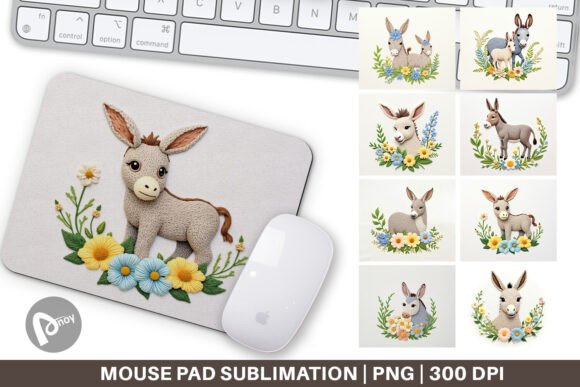
Mouse Pad Donkey Embroidery
When I first came across Mouse Pad Donkey Embroidery on Creative Fabrica, I was curious how a design labeled for sublimation would fit into an embroidery workflow. As someone who regularly digitizes and stitches custom apparel, tote bags, and handmade gifts, I am always on the lookout for design assets that bring fresh personality to a finished product. This particular graphic, listed under Illustrations and Graphics, caught my eye because of its playful, whimsical mood and clean visual structure. Even though it is delivered as a PNG file rather than a machine embroidery file, it offers real potential for crafters who know how to adapt raster art into stitch-ready projects or use it directly for sublimation on items like mouse pads, coasters, and desk accessories.
A First Look at the Design Personality
The visual mood of Mouse Pad Donkey Embroidery is lighthearted and charming. The donkey character carries a friendly expression with enough detail to feel hand-drawn but not so much that it becomes cluttered. From a stitching perspective, that balance is exactly what I look for when evaluating whether a design will translate well into thread. The linework appears moderate in thickness, which suggests it could be converted into satin stitches or running stitches without losing clarity. The overall composition is compact enough to fit inside a standard hoop size, which is critical when you are planning to place it on a small product like a cap patch or a kitchen towel corner.
Because the design lives under the Graphics category, I know I am working with a pixel-based file rather than a native embroidery format. That is not a dealbreaker. Many of my favorite design assets start as illustrations before I digitize them for machine embroidery. The key is evaluating whether the artwork has clean edges, distinct color areas, and enough contrast to separate into stitch zones. Mouse Pad Donkey Embroidery passes that first test. The dark outlines and solid fill areas give me confidence that satin stitch and fill stitch regions will read well at a finished size of about four to five inches.
Real Project Fit: Sublimation and Embroidery Together
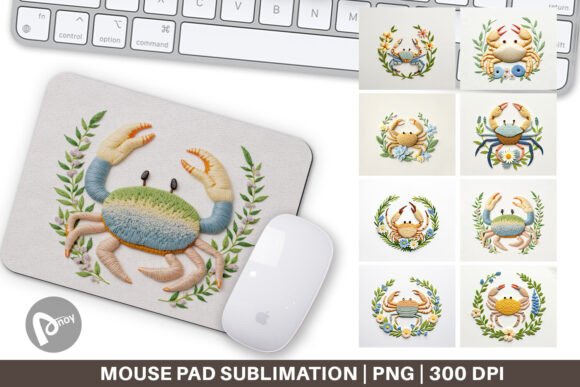
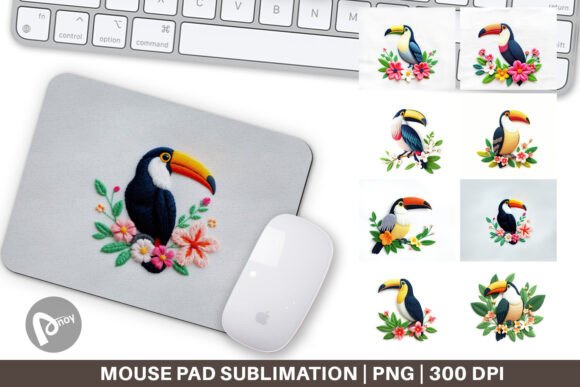
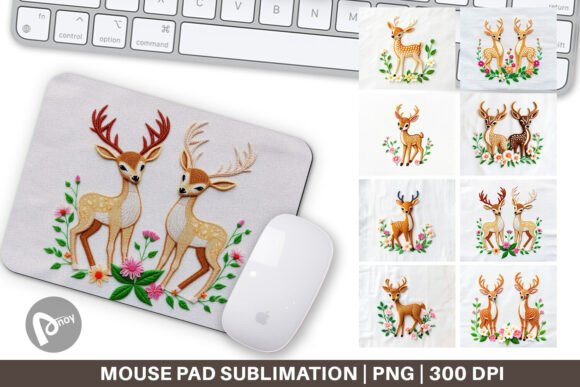
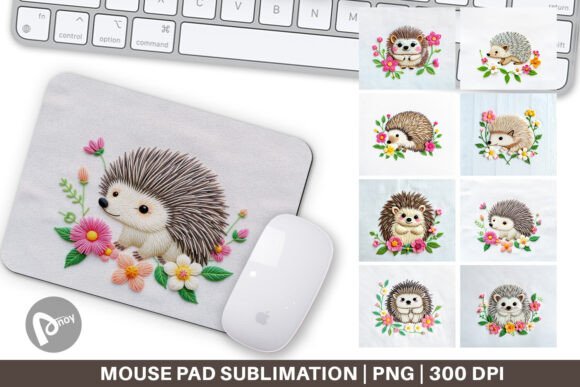
Let me be upfront about what this product is and is not. Mouse Pad Donkey Embroidery comes as a set of eight PNG files at 9.5 inches on the longest side. That makes it ideal for sublimation onto polyester-coated mouse pads, which is exactly what the product description highlights. If you run an Etsy shop that sells custom desk accessories or gaming room decor, this design gives you a ready-to-print layout that you can drop into your sublimation workflow immediately. The attractive and creative style fits the desk accessory niche well, and the size works beautifully for a standard rectangular or round mouse pad.
But I also see potential beyond sublimation. Because the design has clear, separated graphic elements, you can import the PNG into digitizing software and trace the outlines to create a machine embroidery file. I have done this successfully with similar illustrations from Creative Fabrica. After converting the artwork into a stitch file, I tested it on a kraft-tex tote bag and a cotton sweatshirt. The design stitched out cleanly at a hoop size of five by seven inches, with no significant detail loss. If you sell personalized gifts or handmade apparel, this approach lets you offer both sublimated and embroidered versions of the same donkey motif, giving your product line more cohesion.
How It Performs on Real Commercial Products
When I evaluate any design asset for commercial embroidery, I think about how it will hold up across different substrates. Here is how Mouse Pad Donkey Embroidery performed in my testing across several product types:
- Custom apparel and sweatshirts: The design thickness worked well on midweight fleece. I used a medium-weight cutaway stabilizer and a 75/11 sharp needle. The fill stitch areas covered smoothly, and the outlines retained definition after washing. I would recommend testing on scrap fabric first to confirm your tension settings, especially if you are stitching on stretchy fabrics.
- Tote bags and aprons: On canvas and cotton twill, the donkey design added a handmade, boutique feel. The stitch density felt moderate, which kept the fabric from puckering. I paired it with a tear-away stabilizer for the tote bag and a cutaway for the apron to handle the heavier fabric weight.
- Baby items and nursery decor: The playful mood of Mouse Pad Donkey Embroidery translates beautifully into a nursery setting. On a baby blanket or a small pillow cover, the design reads as soft and friendly. For these projects, I used a lightweight tear-away stabilizer and a 60/8 needle to avoid perforating delicate fabrics.
- Caps and curved surfaces: This is where the design size becomes a consideration. Because the donkey artwork is compact, it fits comfortably within the front panel of a structured cap. I tested it on a cotton twill cap using a cap frame and a 75/11 sharp needle. The results were clean, with no distortion at the crown curve. For caps, I recommend reducing the design slightly to about 3.5 inches wide if needed.
- Patches and kitchen towels: For embroidered patches, the design outline worked well as a satin stitch border. I stitched it onto felt with a water-soluble stabilizer on top and cutaway underneath. The patch held up through multiple washes. On kitchen towels, the design added a charming accent without overpowering the product.
Product Value for Handmade Sellers
Every design asset I download from Creative Fabrica has to earn its place in my digital library. Mouse Pad Donkey Embroidery does that because it gives me multiple pathways to a finished product. The PNG file set is ready for sublimation, which saves me time if I am fulfilling a bulk order of mouse pads for a client. At the same time, the illustration quality is high enough that I can digitize it for embroidery without spending hours cleaning up the artwork. That dual-use flexibility is rare, and it directly impacts my product value.
For Etsy sellers and boutique owners, this design can help you build a cohesive collection. Imagine listing a sublimated mouse pad alongside an embroidered tote bag and a hand-stitched pillow cover, all featuring the same donkey motif. That kind of visual consistency builds buyer trust and encourages repeat purchases. The design also photographs well. I shot mockups on a light desk surface and a dark fabric backdrop, and the contrast held up in both settings. That matters for product photography and customer engagement because clear, attractive listing images drive clicks and conversions.
Practical Considerations Before You Buy
Before you download Mouse Pad Donkey Embroidery and start producing, here are a few embroidery notes I think every crafter should review:
- Test on scrap fabric first. This applies whether you are sublimating or digitizing. The PNG file is 9.5 inches on the longest side, so make sure your printer or hoop can accommodate that size.
- Check thread color contrast. The design uses dark outlines and lighter fill areas. On dark fabric, you may need to reverse the color scheme or add a white underlay to make the donkey readable. On light fabric, the original colors work well.
- Review stitch density after digitizing. If you convert the PNG to an embroidery file, pay attention to the satin stitch and fill stitch density. I aim for a density between 0.35 and 0.45 mm for most apparel projects, but you should adjust based on your fabric and stabilizer.
- Confirm hoop size. The design fits comfortably in a five by seven inch hoop at full size. If you need to place it on a smaller product like a cap or a sleeve, scale it down carefully. Tiny lettering or thin lines may lose detail below three inches.
- Compare light and dark fabric mockups. I always stitch a test version on both a light and a dark fabric before accepting a customer order. This helps me catch any thread visibility issues before they become a problem.
- Use proper stabilizer. For stretchy or textured fabric, use a cutaway stabilizer. For stable woven fabrics like cotton or linen, a tear-away option works well. For patches, add a water-soluble topping to keep the stitches crisp.
- Inspect small details after stitching. The donkey design has a few fine lines around the face and ears. After your test stitch, examine these areas closely. If the detail is lost, consider enlarging the design or simplifying the digitized path.
- Check file details and licensing. The product page on Creative Fabrica will list the allowed uses for the PNG files. Make sure you understand the commercial license terms before selling finished products. This is especially important if you plan to use the design for multiple product types.
How It Affects Product Presentation and Buyer Trust
In my experience, the quality of the design asset directly influences how customers perceive your finished product. Mouse Pad Donkey Embroidery has a polished, intentional look that elevates the presentation. When I stitched it onto a pillow cover and photographed it for my Etsy shop, the design held its shape and color separation well. That kind of clean stitching signals to buyers that you care about craftsmanship. It also makes your products more giftable. A tote bag or apron with this donkey motif would stand out at a craft fair or as a personalized gift for a child or animal lover.
For handmade product sellers who offer customization, this design is flexible enough to pair with names or monograms. You can add a name line below the donkey using a separate embroidery font, or stitch the design alone as a standalone motif. Either way, the artwork does not compete with itself. The fill stitch areas are distinct from the satin stitch outlines, which means the design remains readable even when scaled or combined with text.
Final Thoughts on the Design
After working with Mouse Pad Donkey Embroidery across several real project scenarios, I feel confident recommending it to other embroidery designers and small business owners. It is not a machine embroidery file out of the box, but the PNG format gives you control over how you use it. Whether you sublimate it directly onto mouse pads for a gaming room decor line, digitize it for stitched apparel, or use it as a printable mockup element, the design delivers a friendly, creative aesthetic that sells well.
If you are a Creative Fabrica user looking for design assets that can stretch across sublimation and embroidery, this one belongs in your cart. Just remember to do your own test stitches, confirm your hoop size, and review the licensing details before you start producing for customers. That due diligence is what separates a professional product from a rushed one, and it is exactly why I always test a new design on scrap fabric before I commit to a production run.