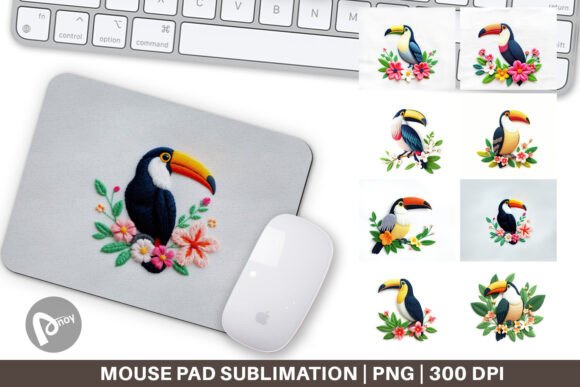
Mouse Pad Cockatiel Embroidery Review for Boutique Sweatshirts
When I first opened Mouse Pad Cockatiel Embroidery as a digital embroidery file, I had to pause. The name suggests a functional desk accessory, but the design itself carries a whimsical, pet-inspired charm that translates surprisingly well into apparel. As an embroidery designer who has digitized and stitched hundreds of motifs for small shops, I know the difference between a graphic that looks good on screen and one that performs beautifully on fabric. This review walks through how Mouse Pad Cockatiel Embroidery might behave as a real machine embroidery design on a premium sweatshirt collection, what adjustments you may need, and whether it deserves a spot in your next limited drop.
First Impressions: Mood, Layout, and Stitching Personality
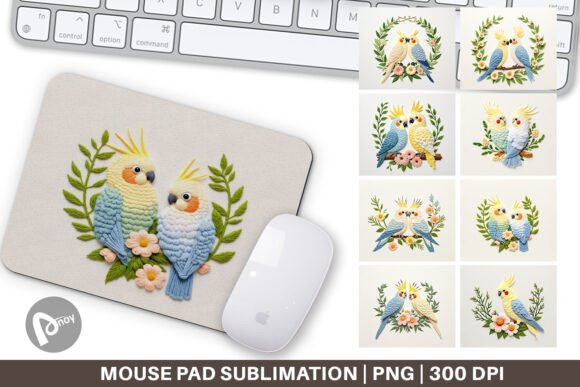
The Mouse Pad Cockatiel Embroidery design reads as playful, gentle, and slightly decorative rather than bold or feminine in an overt way. The cockatiel motif suggests soft curves, a crest, and rounded body shapes that lend themselves to sweatshirt embroidery with a cozy, handcrafted feel. I imagine the design landing somewhere between minimal and cute—approachable enough for everyday wear yet distinct enough to create a memorable visual for a boutique brand.
From a layout perspective, this embroidery file appears to have moderate detail. Cockatiels have feather textures, a defined beak, and eye markings that require careful digitization. If the original PNG source (described as a sublimation mouse pad graphic) was created at 9.5 x 8 inches, the stitch path may need scaling and re-densifying for apparel use. In my experience, a design that works on a flat mouse pad often loses clarity when translated into thread on a curved hoodie front. The stitching personality here should be soft, with a mix of satin stitches for the beak and eye and a light fill for the body to keep the bird recognizable without feeling stiff.
For a small shop product aimed at bird lovers or customers who value quirky, personal custom apparel, this design has strong emotional appeal. It feels like something you would find in an Etsy seller’s shop that specializes in handmade products with a story.
How This Design Performs on Sweatshirts and Hoodies
I evaluated Mouse Pad Cockatiel Embroidery for four common placements: chest center, left chest pocket area, sleeve accent, and back center. Each placement changes how the design reads and how much stitch density the fabric can handle.
Chest Center Placement
At 4 to 5 inches wide, the cockatiel sits naturally on the front of a crewneck sweatshirt or pullover hoodie. The hoop size required would be a standard 5x7 or 6x8, depending on whether you include any surrounding text or decorative elements from the original PNG. Because the design originates from a mouse pad concept, it likely contains a rectangular or rounded bounding box. For apparel, I recommend removing any rigid borders to let the bird float freely on the fabric. This gives the finished product a more organic, handmade product look that sweatshirt embroidery buyers expect.
On neutral sweatshirts—cream, oatmeal, heather gray—the thread colors of the cockatiel should lean toward soft grays, warm whites, and a touch of peach or yellow for the cheek patch. These colors blend well with fabric texture and create a minimal yet recognizable image. On dark fabric, you will need a white or light underlay to ensure the bird pops, especially in the lighter feather areas. The stitch density should not exceed 7,000 stitches per square inch for a mid-weight fleece; anything denser risks puckering or breaking needles.
Sleeve and Back Accents
A single cockatiel placed vertically on a sleeve cap or cuff adds a subtle hoodie design detail that small shop product buyers appreciate. Because the motif is not overly complex, it scales down well to 3 inches for sleeve use. At this size, check that the beak and eye still read clearly. If the original digital embroidery file was not optimized for small sizes, you may need to simplify the feather lines or enlarge the eye slightly.
For a back design, Mouse Pad Cockatiel Embroidery works beautifully as a centered statement on the upper back of an oversized hoodie. A larger version—say 7 to 8 inches wide—requires a larger hoop size and careful stabilization. I recommend a tear-away stabilizer for fleece to reduce show-through and a cut-away stabilizer for stretchy blends. The design's moderate stitch density keeps the fabric from buckling, which is crucial for commercial embroidery runs of multiple units.
Practical Designer Concerns Before You Stitch
Every machine embroidery design comes with production quirks. Here are the issues I flagged with Mouse Pad Cockatiel Embroidery that any apparel decorator or embroidery shop owner should verify before stitching a batch of custom apparel.
Thread Color Contrast and Fabric Thickness
The original product description mentions a PNG file for a sublimation mouse pad, which means the colors in the digital preview may differ from thread options. I recommend pulling physical thread cards to match the cockatiel’s natural tones. A typical cockatiel uses grey, white, yellow, and orange-peach. For thread colors, choose a high-contrast beak (dark orange vs. light body) so the bird remains readable at a distance. On thick fleece or french terry, the fabric thickness can swallow fine details; use a 75/11 needle for lightweight fleece and an 80/12 for heavy sweatshirts.
Stitch Density and Stabilizer Choice
Because this design originated as illustrations and graphics for a flat surface, the stitch density may need adjustment. If the file contains too many satin stitches in small areas, those sections can become stiff and cause the fabric to pucker. I suggest reducing density by 5–10% for fleece and adding a layer of cut-away stabilizer underneath. A medium-weight stabilizer gives enough support without adding bulk to the back of the handmade product.
For embroidery file formats, the description notes you receive a PNG, which is not a stitch file. You will need to convert or digitize the artwork into a compatible format (DST, PES, etc.) for your machine embroidery design software. If you purchase a ready-to-stitch digital embroidery file from a designer, always test it on scrap fabric first. Check the small-size readability by stitching at 3, 4, and 5 inches wide to see where the cockatiel holds its shape best.
Hoop Placement and Washing Durability
Placement on a sweatshirt requires attention to the center front seam or the sleeve curve. For hoodie design, the hoop placement should sit centered and flat. If the design is asymmetrical (e.g., the bird faces one direction), orient it toward the wearer’s center for a balanced look. After stitching, consider a test wash to ensure the thread colors do not bleed and the stitch density does not cause the fabric to shrink unevenly. For a finished product that lasts, recommend cold water wash and hang dry to your customers. This builds buyer trust and reinforces your boutique brand’s commitment to quality.
Impact on Product Value, Brand Identity, and Customer Engagement
Adding Mouse Pad Cockatiel Embroidery to a premium sweatshirt line can elevate the perceived value of your small shop product. Embroidered items carry a tactile, lasting quality that printable mockups and design assets cannot fully replicate. When customers receive a hoodie or custom apparel with a carefully stitched cockatiel, they connect emotionally with the brand. This design, with its approachable and slightly nostalgic mood, appeals to a niche but passionate audience—pet owners, bird enthusiasts, and anyone who values playful apparel decorator details.
For Etsy sellers and creative entrepreneurs, using this design as a limited-edition drop creates urgency. You can photograph the embroidered product next to lifestyle props like coffee mugs or succulents to reinforce the cozy vibe. The finished product also works well in lifestyle product photography because the soft curves of the bird contrast nicely with structured denim or neutral knitwear.
From a brand identity perspective, Mouse Pad Cockatiel Embroidery positions your shop as attentive to detail and willing to explore niche illustrations and graphics. It signals that your machine embroidery design choices are thoughtful, not generic. This builds visual recognition and encourages repeat buyers. Customer engagement can be further strengthened by letting your audience vote on thread color variations or placement options.
Production Checklist for Boutique Sweatshirt Drop
Before committing to 20 or 50 units, run through this checklist:
- Convert PNG to embroidery file — Ensure your digital embroidery file is cleanly digitized with proper pull compensation for fleece.
- Test stitch density — Adjust if the design exceeds 10,000 stitches for a 5-inch size; lower density improves drape.
- Choose stabilizer — Use cut-away for stretchy fabrics, tear-away for stable knits.
- Check hoop size — Verify your biggest hoop accommodates the desired scale, especially for back placements.
- Order extra thread — Stock the core thread colors (grey, white, yellow, orange) to avoid mid-run shortages.
- Create a mockup — Use a printable mockup or actual test stitch to preview placement on your sweatshirt style.
- Photograph the finished product — Capture both close-ups of the handmade product and full-body shots for listings.
- Write product copy — Mention the sweatshirt embroidery details, care instructions, and the design’s inspiration to boost buyer trust.
If you are an embroidery shop digitizer or a small clothing brand owner evaluating Mouse Pad Cockatiel Embroidery for your next hoodie drop, I recommend treating this as a versatile, conversation-starting motif. It is not overly complex, yet it carries enough personality to differentiate your custom apparel from mass-produced options. The key is to adapt the file from its sublimation mouse pad origin into a stitch-friendly format that respects the fabric and the wearer’s comfort.
Final Thoughts on Mouse Pad Cockatiel Embroidery
After all the practical checks, I believe Mouse Pad Cockatiel Embroidery offers real potential for a boutique brand that values charm and craftsmanship. The design feels at home on neutral sweatshirts, pastel hoodies, and even oversized crewnecks meant for lounging. It is not a loud, aggressive graphic; it is a quiet, endearing detail that rewards a closer look. That kind of subtle appeal is exactly what handmade product buyers seek when they choose an Etsy seller over a big box retailer.
If you are preparing a limited drop, test this machine embroidery design on your fabric of choice, adjust stitch density and thread colors as needed, and let the cockatiel’s gentle presence speak for itself. With proper stabilizer and hoop placement, it will stitch cleanly and last through many wears. For digital sellers and handmade business owners, Mouse Pad Cockatiel Embroidery is a design worth exploring—not as a mouse pad, but as a meaningful piece of custom apparel that connects with people through a shared love of small, beautiful things.